At the Manuvision training, you will explore all aspects of body therapy in a circle of practice-oriented learning, where treatment and attention training are the central focus. You are taught by teachers who are masters of body therapy and who closely support you in your development. The teaching takes place at the treatment table, and you primarily learn through the body.
What You Will Learn
At the Manuvision education, you will be introduced to a wide range of techniques and approaches that equip you with the knowledge and tools to work with both body and mind. Over the course of the two-year program, you will be guided through all aspects of the body therapy craft:
- Technique and Empathy
- The Nervous System
- Breath and Emotions
- Attention and Relationship
- The Body and Its Functions
- Psychology and Conversation
- The Body’s Energy System
- Training
Over the two-year education, you will be guided through all aspects of the body therapy craft.
Technique and Empathy
Technique forms the foundation on which treatment is built—it is what drives the work forward.
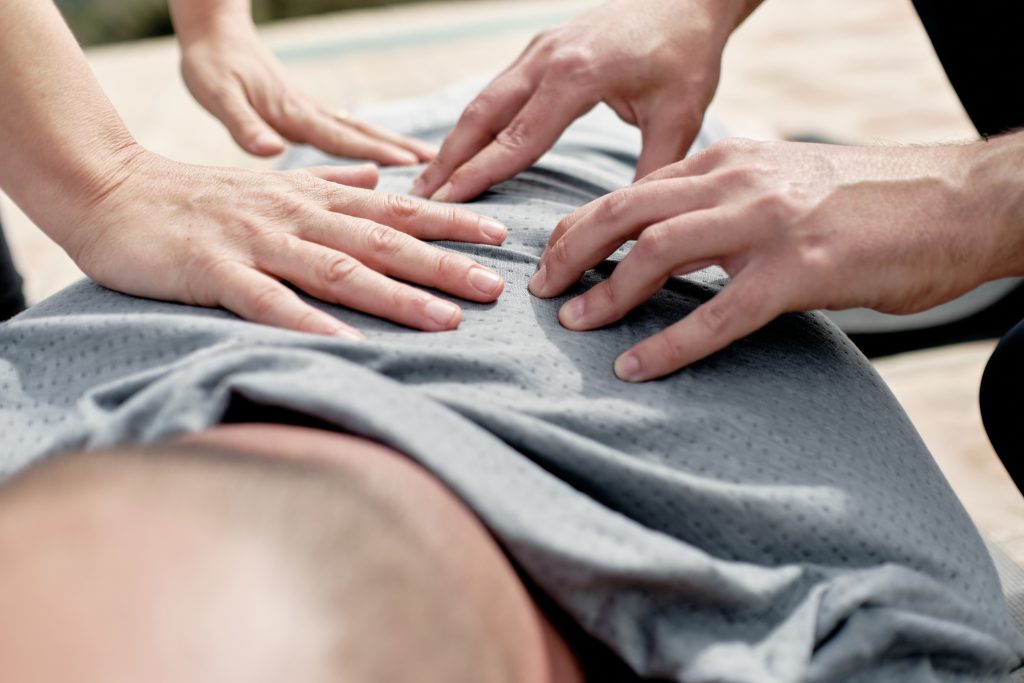
- You will learn to work directly with the body using pulsation, pressure, grip, and massage techniques.
- You will develop the ability to sense different states of tension—overactive and underactive, flexible and restricted, rigid and free—
- you will learn how to support the body in releasing tension.
After just one month of the Manuvision education, you will have developed enough technical skill to begin working with clients.
As your skills progress, you will be introduced to more advanced techniques such as joint release. When tension in the muscles, tendons, and connective tissue surrounding a joint becomes imbalanced or compressed, mobility and flexibility are reduced. Over time, this often does not resolve on its own. You will learn techniques—from slow, controlled stretches to more dynamic mobilizations—that help restore better alignment and movement, always with respect for the body’s natural limits.
Empathy is what transforms technique into treatment. It is the sensitivity that allows you to recognize which approach is needed in each individual situation. Developing empathy means refining your sensory awareness—what we call the ability to “see.” This includes the ability to:
- Perceive with all your senses and feel the connections between muscles, joints, and bones
- Sense the emotions behind patterns of tension
- Recognize how a person’s history is reflected in their body
- Understand how we influence one another through presence and interaction
Empathy guides your understanding of cause and effect and inspires curiosity, exploration, and meaningful inquiry. It is a defining element of Manuvision body therapy—and of how we teach throughout the education.
The Nervous System
Put simply, the nervous system forms the foundation of our psychological experience. It is the sensory system that determines whether we meet the world with openness or defensiveness. Through working with the nervous system, it becomes possible to revisit and reshape how the body holds past experiences—especially those expressed as chronic muscle tension and restricted breathing.
The autonomic nervous system operates beyond conscious control. It regulates our survival responses and sends signals to the body’s muscles and organs when we feel unsafe or under pressure. In this way, the nervous system reflects our past: its responses are shaped by how it has learned to react through previous experiences, including trauma. This is why states such as stress and anxiety are closely linked to an activated or alarmed nervous system.
You will gain insight into the body’s fight-or-flight responses in situations of shock and trauma, and learn techniques to help regulate the autonomic nervous system. By calming the nervous system, it becomes possible to work with the underlying stress patterns that contribute to tension in the body.
“You gain an understanding of fight-or-flight responses in shock and trauma, and learn how to regulate the autonomic nervous system. This creates the foundation for working with the chronic stress patterns that underlie tension in the body.”
Breathing and Emotions
Breathing connects the body, emotions, and thoughts. Releasing the breath is one of the most direct ways to calm the nervous system. It is also the function that reacts first—and often most clearly—when we are under stress. For this reason, an essential part of body therapy is learning to read a person’s state through their breathing.
You will learn techniques to release and deepen the breath, helping to unlock and process held-back emotions. When the breath flows more freely, so do energy and emotional expression.
Emotions can be understood as movements within us—movements we may sometimes suppress or hold back. When emotions are held, they can create tension and restlessness in the body. Body therapy therefore also focuses on supporting the natural flow of emotions through the breath.
You will learn to stay present with emotions—even when they are intense—and to support others through challenging emotional states with steadiness and clarity.
‘“You learn techniques to free the breath and release suppressed emotions—because when the breath flows, energy and emotions begin to move with it.”
Attention and Relationship
Attention is the ability to hold awareness of multiple elements at once. It allows you to stay present with both yourself and another person—what separates you and what connects you. This awareness makes it possible to meet the other as a whole person and is essential for building an authentic relationship with a client. For this reason, attention is a core foundation in the work of a Manuvision body therapist.
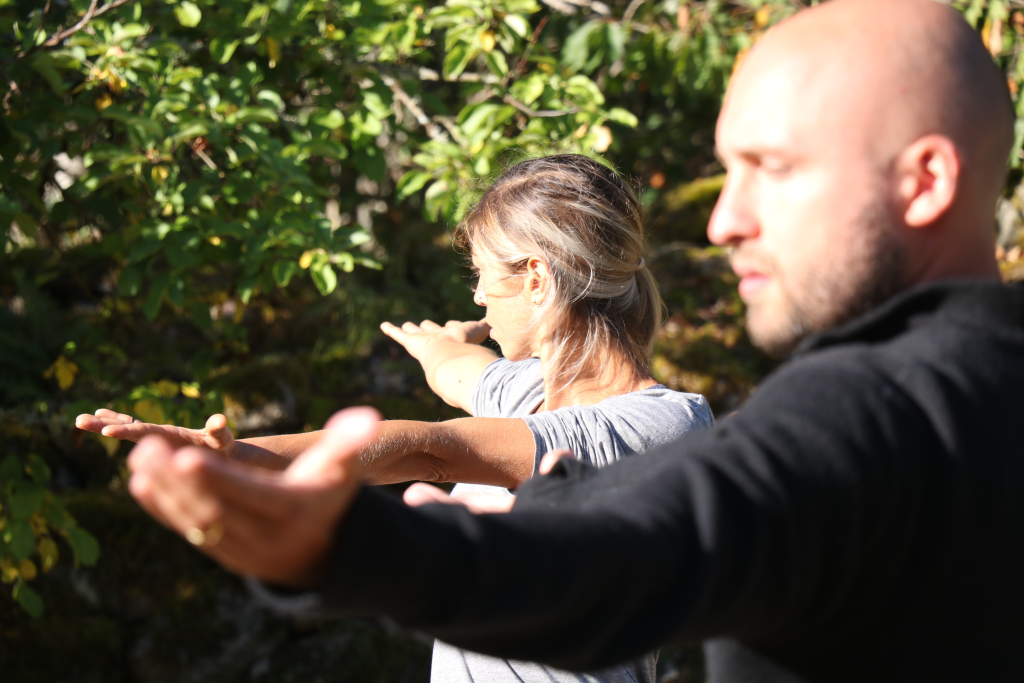
You will be introduced to tools that strengthen your attention through both meditation and a series of exercises refined over more than 20 years. In meditation, the focus turns inward, deepening your awareness of inner and outer impressions, as well as the connection between body, thoughts, and emotions. In Manuvision’s exercises, the focus shifts outward—developing your sense of grounding and your interaction with the world around you. This supports ease of movement, flow in the body, and the development of both empathy and quality of touch.
Research shows that the strength of the relationship between client and therapist is one of the most important factors in any therapeutic process. That is why relational work is an integral part of the Manuvision education. You will be both supported and challenged with tools to uncover blind spots and deepen your self-awareness. From this foundation, you can truly meet another person and build the depth of connection that defines a skilled Manuvision body therapist.
“We develop attention to both internal and external impressions, along with a deeper awareness of the connection between body, thoughts, and emotions.”
The Body and Its Functions
You will gain a thorough understanding of the musculoskeletal system, including the structure and function of bones, joints, muscles, tendons, and connective tissue. You will learn how different muscle groups are connected and how they respond to movement. Through a combination of exercises, treatments, and training, you will develop practical skills that enable you to address functional imbalances and disorders in the body.
You will also be introduced to the body’s other essential systems, including the organs, lymphatic system, and digestive system. For example, you will learn why the lymphatic system plays a key role in immune function and the body’s ability to detoxify, as well as how the nervous system, digestion, and psychological state influence one another.
Over time, you will gain an understanding of the body as a complex, interconnected system. You will develop the ability to work with specific issues while also supporting the body’s natural self-healing processes—allowing the body, as much as possible, to do the work itself.
Psychology and Conversation
Body and mind are deeply interconnected, which is why psychology is an integral part of body therapy. Psychology is the study of mental life as expressed through thoughts, emotions, and impulses.
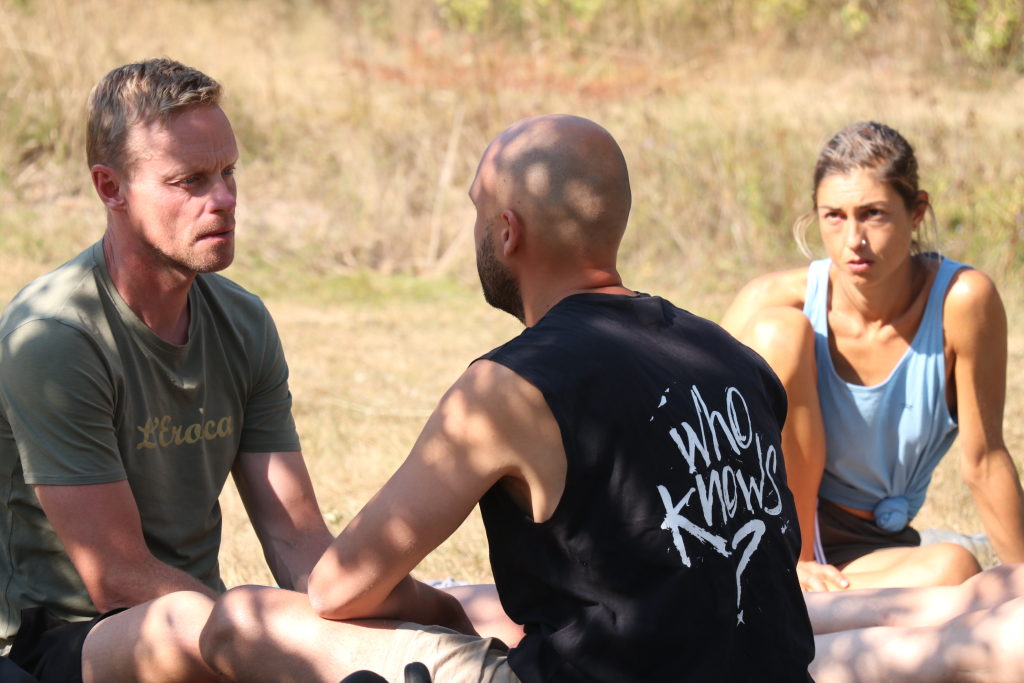
In body therapy, the focus is not on the stories of the mind, but on the language of the body. We approach the psychological field through the body itself. This means you will learn to sense how stress and trauma are held in the nervous system and expressed through muscle tension. You will also become familiar with bodily signals and tension patterns that can be linked to shock and traumatic experiences.
The training also explores the subtle art of communication. What should be said—and what should not? You will learn a new kind of language. As you begin the program, you will learn how to “speak” to the body: to recognize the difference between addressing the client’s mind and engaging with their bodily experience. Equally important, you will learn to listen. By listening to and reading the body, you develop the ability to see and meet the person beyond their stories and defense mechanisms.
‘“In body therapy, we don’t focus on the mind’s stories, but on the language of the body. We engage with the psychological field through the body itself—learning to sense how stress and trauma are held in the nervous system and expressed as muscle tension.”
The Body’s Energy System
Based on meridian theory and pressure points, you will be introduced to the body’s energy system, including the five-element theory and the connections between meridian pathways and emotional states.
The meridian system is understood to support the body’s vitality. In simple terms, illness can be seen as a result of reduced flow or blocked energy. Body therapy therefore also focuses on releasing what may be restricting this flow within the body.
Through techniques inspired by acupressure and reflexology, you will learn how to initiate processes that help restore the natural flow of energy and support balance in the body’s energy system.
‘You will learn through techniques from acupressure and reflexology to initiate the processes needed to get the energy to flow freely and maintain balance in the body’s energy system.’
And What Cannot Be Put into Words
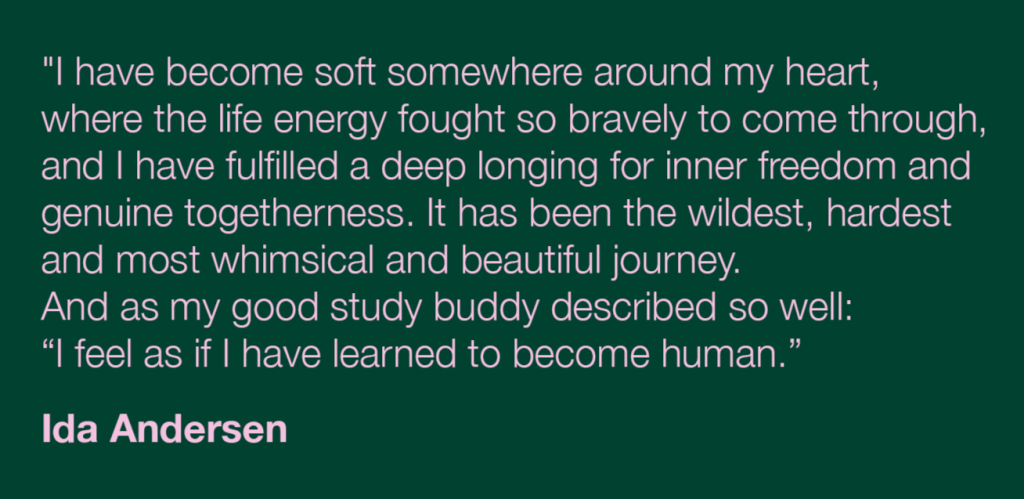
Many students describe the Manuvision education as a journey—a sense of “waking up” or going through a profound personal change. That’s why we sometimes refer to parts of the training as “inner mountaineering”: It is the work of daring to leave the senses open and encounter the boundaries within oneself.
Along the way, many will encounter resistance, as often happens when the senses are sharpened and personal limits are challenged. Yet it is precisely in this space that real change can happen. Old patterns and habits that may have restricted both the body and one’s view of the world can begin to loosen—and new, unexpected directions in life may start to unfold.
‘Many students talk about the Manuvision education as a journey. They describe it as a feeling of “waking up” or having undergone a personal change’
Hands-On Learning & the Master–Apprenticeship Approach
Most of the teaching takes place at the treatment table, where learning happens primarily through the body. The program is built on the master–apprenticeship principle, and your teachers are highly experienced practitioners in body therapy. On average, each brings around 20,000 treatments’ worth of hands-on experience and more than 15 years of teaching.
The teaching team in Barcelona consists of six instructors, each with their own unique approach to treatment. There is no single “right” way to treat. While differences can often lead to conflict, at Manuvision they are seen as a natural and valuable part of the learning process. Therefore, the diversity of the teachers is important because it ensures that you get a broad introduction to the body therapy craft and several profiles to reflect on.
‘The teaching is based on the master’s apprenticeship principle, and your teachers are masters in body therapy. On average, they each have around 20,000 treatments in their hands and 15 years of teaching experience.’
Read more: Teachers
Personal Talent Development
You will be assigned a dedicated mentor who will support you closely throughout the two-year program. Along the way, you will receive ongoing personal feedback designed to strengthen your development and learning process.
Our approach to learning is guided by the idea that “all models are wrong, but some are useful.” Rather than imposing a fixed system, we focus on supporting you in developing your individual strengths and finding your own path as a therapist.
Through a master–apprenticeship approach, we emphasize what is known as implicit learning. This means we don’t simply tell you what to do—instead, we guide you with feedback and support as you develop and refine your own therapeutic practice.
‘Our focus is to help and guide you to develop your personal talent and to find your own path as a therapist.’
Retreats
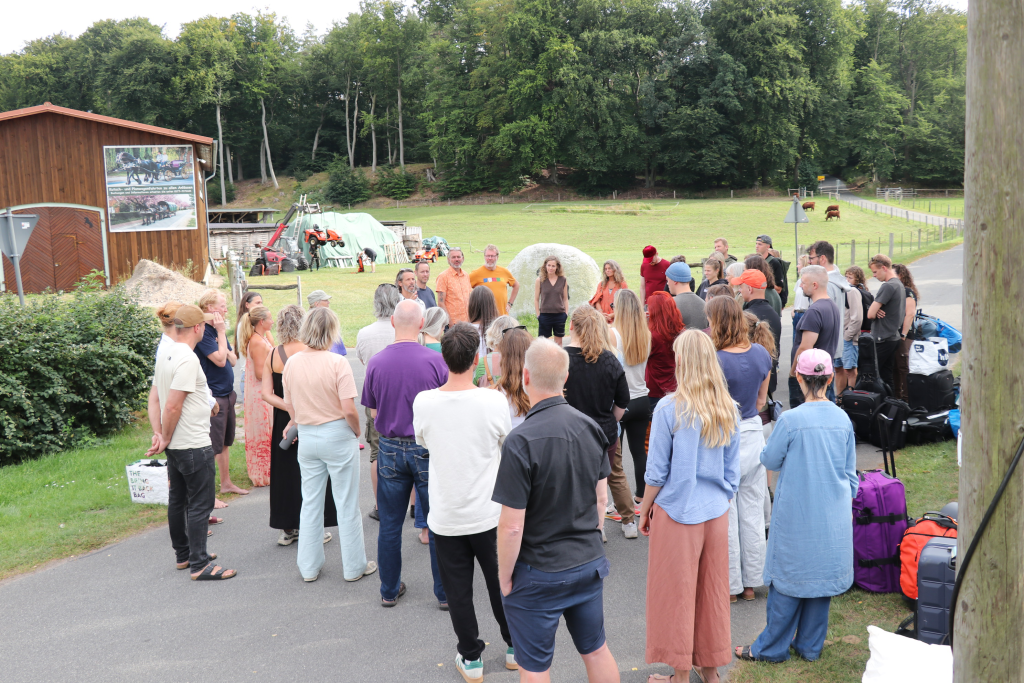
During the Manuvision education, you will take part in four retreats: two international retreats in Germany and Sweden, and an annual fasting retreats in Catalonia.
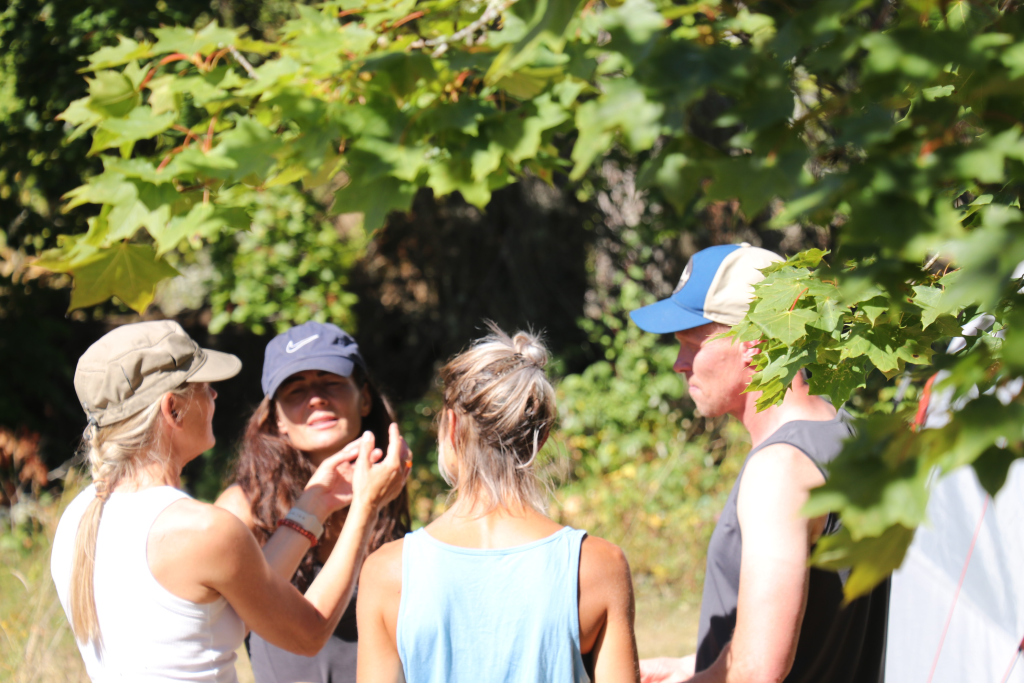
At the retreats in Germany and Sweden, you will have the opportunity to immerse yourself deeply in the practice of treatment. This is where the work truly comes alive. Surrounded by beautiful natural settings, we explore what transforms body therapy from technique into meaningful treatment: How do you build a genuine connection with the person on the table? And what might stand in the way of presence and empathy in your relationship with the client?
During the annual fasting retreats, the focus shifts to cleansing the body. Fasting helps sharpen your senses and supports the development of attention and awareness. You will learn how your body responds when everyday stimuli are reduced, and gain insight into different food groups and how they affect both your body and mind.
‘In beautiful natural surroundings, we delve into everything that elevates body therapy from techniques to treatment’
Read more: Retreats
Building the Foundation for Professional Practice
From the very beginning of the Manuvision education, you are encouraged to give student treatments outside of school. This serves a dual purpose: firstly, it allows you to gain hands-on experience that you can bring into the classroom; secondly, by the time you complete the Manuvision Training, you will have started to build your own client base and established a solid foundation for launching your practice.
You are also encouraged to engage in regular self-training, as this not only strengthens your future treatment work but also conditions your body to handle the physical demands of working at a treatment table for extended periods—without fatigue.
At the same time, your treatment practice offers an opportunity to help finance part of your education along the way.
Examination
The education concludes with an exam in both treatment and training, which you must pass in order to call yourself a Manuvision body therapist and trainer.
You will have the opportunity to be marketed on Manuvision’s therapist page for 100€ per year.
SIGN UP FOR FREE INTRO event
Interested in learning more about our body therapy education ? Meet a teacher, watch a live treatment demonstration, and maybe get on the table yourself to experience what Manuvision Body Therapy is all about.
Do you want to join the next group in 2027?
If you are curious about our education, you are welcome to contact us at info@manuvision.es or call our student counselor at +34 625 730 706 and book a non-binding personal conversation with one of the teachers.
The next group starts in January 2027
Overview
Want to know more? Contact our study counselor
Aina Godoy Vilà
Email: aina@manuvision.dk
Phone: +34 22 73 11 23