
In Manuvision body therapy, we treat stress through the body: We create balance in the nervous system, free up the breath, and release muscle tension. Only when the body is at rest can we begin to work with the underlying causes of the stress state.
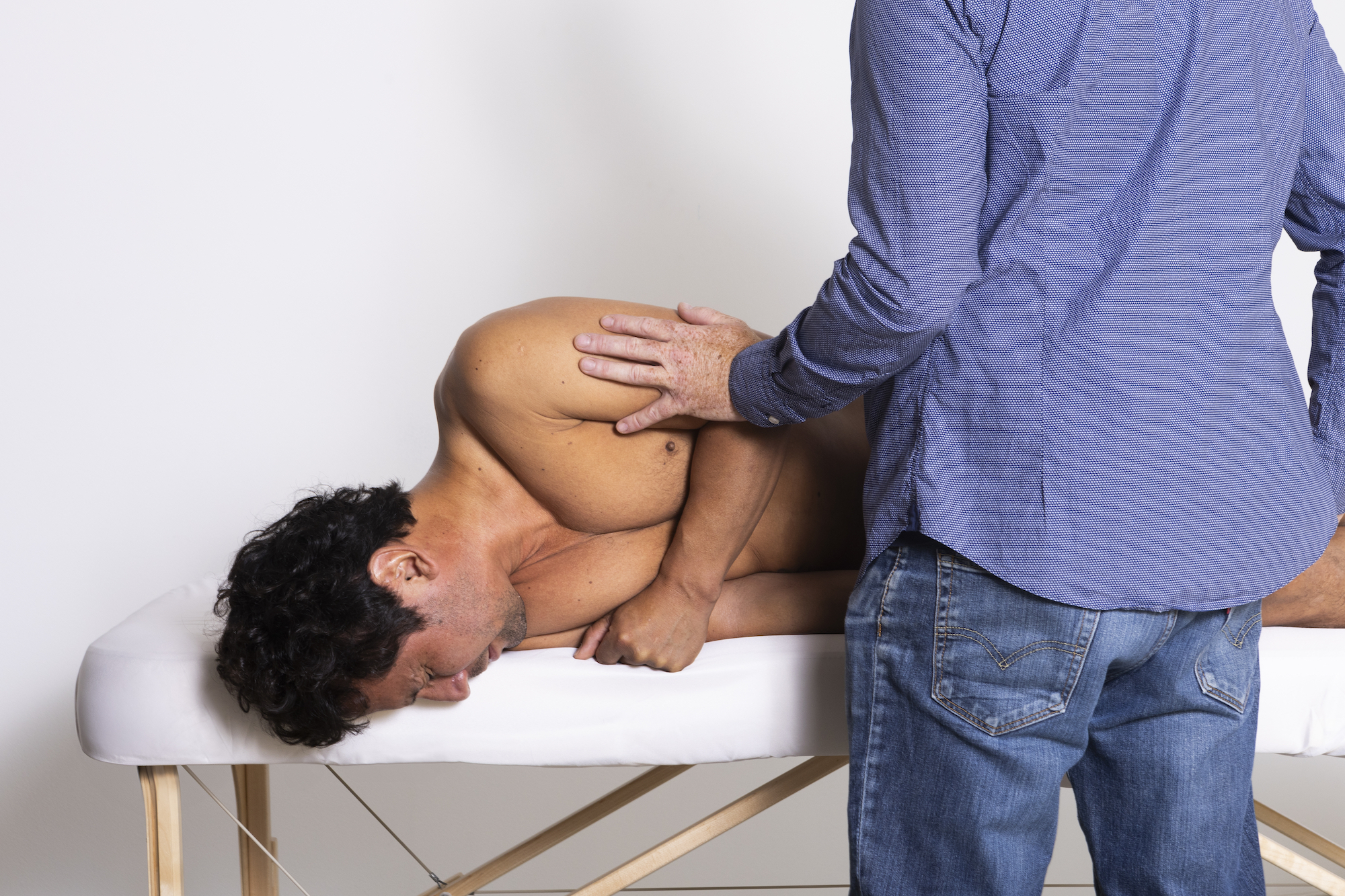
What happens in thes body when we experience stress.
Stress is a state in which the body is in a constant state of alert. This condition creates a contraction in the muscular system, leading to symptoms such as restlessness, headaches, dizziness, sleep problems, heart palpitations, infections, and fatigue.
Stress develops when the body has been under prolonged pressure and remains in a constant state of alert. Whether the strain is mental, emotional, or physical, its effects are held in the body as a contraction in the muscular system. This contraction leads to increased muscle tension and affects the breath, making it more shallow and restricted.
Stress and superficial breathing
Shallow breathing can create a sensation of insufficient space in the body. Muscles become tense, while adrenaline and cortisol are released into the bloodstream, driving the organs to operate beyond their normal capacity. As a result, the body expends more energy than it can replenish, ultimately leading to a state of breakdown—commonly referred to as stress-related burnout.
In Manuvision body therapy, we help create more space and expansion in the body in two ways:
- We begin by opening the breath, creating a feeling of more space in the body.
- From there, we gently meet the deep contractions held in the muscles, helping to release the trauma and emotions stored within them.
Treating Stress Through the Nervous System
The nervous system is central to the treatment of stress. A well-balanced nervous system ensures that we can shift between states—where we are calm and able to recover, and where we are alert and ready to handle the challenges we face. A stressed nervous system is either stuck in a state of alarm (the sympathetic nervous system) or “collapsed” into the part responsible for recovery (the parasympathetic nervous system), which can manifest as burnout.
In Manuvision body therapy, we work with the nervous system through the body by:
- relieving tension in the respiratory muscles while gently releasing the neck and base of the skull to support deeper relaxation
- stimulating activity in key areas of the nervous system that support the body in restoring balance when it is in a heightened, stress-induced state.
Activating the vital areas of the nervous system helps the body release stress by:
- Breathing becomes effortless, lung capacity expands, and the heart rate naturally slows.
- The body conserves energy instead of constantly mobilizing muscles and circulating stress hormones like adrenaline and cortisol.
- Restorative processes are activated, allowing the body to heal and regenerate itself.
Body before mind
The nervous system reacts to stress beyond our conscious control—it responds before we have time to think or decide how to cope. That’s why it’s so important to work with stress through the body. Only when the body is back in balance can we begin to address the root causes of stress and change how we deal with it mentally. From there, we can start to explore where to set boundaries and develop a stronger sense of what truly matters in challenging situations.
How to Prevent Stress
Preventing stress is all about maintaining a balance between what we give and how we recharge. In other words, it’s about making sure we restore the energy we need and avoid using more than we have.
We recharge through habits like healthy eating, regular exercise, sufficient sleep, and nurturing positive relationships. Keeping this energy topped up requires attention—and this is where the body plays a key role. By staying connected to the body, for example through mindful breathing, we can better sense our needs and ensure we get the nourishment and energy required to handle life’s demands.
Performance can lead to stress
Another key factor is how we deal with the pressure to perform—both from ourselves and from the world around us. Performing takes a lot of energy and often puts us under constant evaluation. This can pull our attention away from ourselves and from the signals our body is sending. Preventing stress is therefore also about learning to rest in yourself. This happens most naturally when you are connected to yourself—mentally, emotionally, and physically.
Read more:
Anxiety Treatment
Behandling af depression
Treatment of PTSD