
At Manuvision, we help relieve pain in the back, neck, and lower back using body therapy. With years of experience, we support clients with conditions such as herniated discs, back and neck strain, Scheuermann’s disease, scoliosis, sciatica, and more, helping the body restore balance and ease.
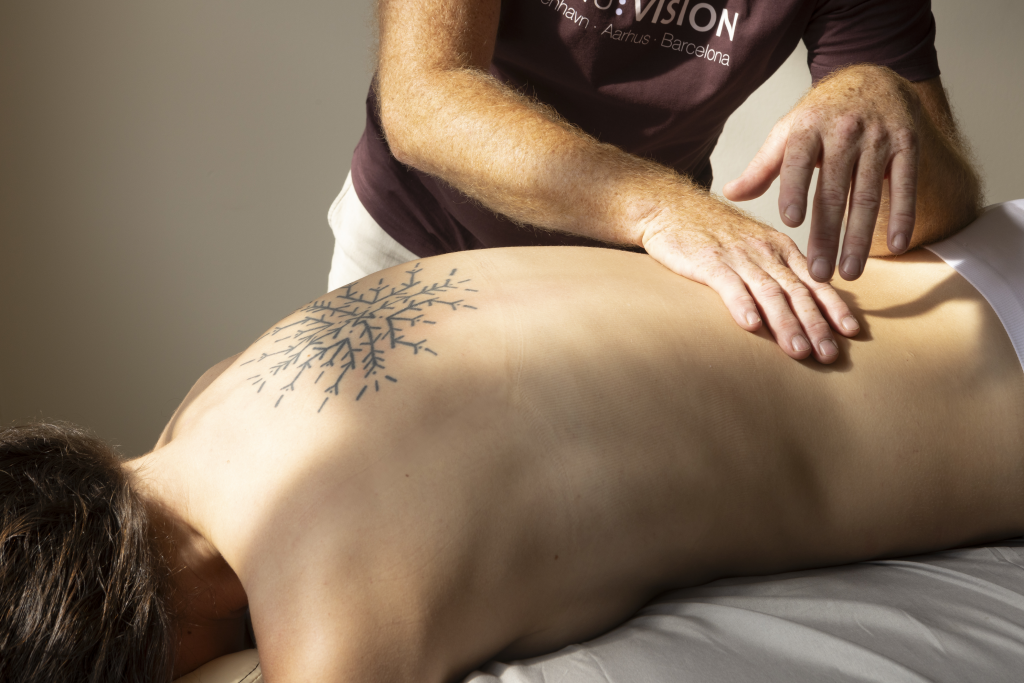
The back and neck are the body’s central supporting pillars. They often bear the brunt of our stress, and we usually only notice them when pain sets in.
At Manuvision, we know that back, neck, and lower back pain often comes from more than just the spine. Our approach is to identify the tension patterns causing discomfort, as well as the internal and external factors that contribute to it. Pain in the spine is often linked to both physical and emotional strain, and to the way we cope with life’s demands.
Relieving pain in the back, neck, and lower back
We often begin treatment by assessing the front of the body before working directly to release tension in the back, neck, and lower back. During a session, we focus on:
- dentifying tension patterns. We explore the layers of tension in the body, including areas compensating for stress elsewhere. Releasing these layers helps reveal the true source of discomfort so we can address it effectively.
- Releasing the breath. Tension in the back, neck, and lower back is often linked to restricted breathing muscles caused by shallow breathing, which can be connected to stress.
- Assessing the spine. We check for misaligned vertebrae that may be locking the back into unhealthy patterns.
- Freeing the joints. By restoring mobility, we help the body relax and regain balance.”
The Back and the Nervous System
The central nervous system runs down the spine, making the back the starting point for nerve pathways that connect to the entire body. Tension in the back can reveal the condition of muscles and organs that receive signals from sore areas in the back, neck, and lower back. At the same time, stress on the nervous system often shows up as tension, which can lead to pain in these areas.
Problems in the back often put pressure on the spinal nerves—the main nerves branching from the spinal cord. This pressure can affect other parts of the body by straining organs or muscle groups. That’s why our treatments also focus on the pathways of the spinal nerves, so we can release tension in the back while positively influencing the connected areas throughout the body.”