
Research Shows Significant Effect of Manuvision’s Treatment for PTSD
Veterans may experience a reduction in—or even fully overcome—the debilitating effects of PTSD after a six-month treatment program with us. The results of research into Manuvision’s PTSD treatment have recently been published in a respected scientific journal Mental Health Science clearly show this. For the first time in Denmark, the effects of body therapy have been studied by the National Institute of Public Health in collaboration with Rigshospitalet and Patientforeningen Danmark.
the results of the research
In the research project, half of the veterans received 24 body therapy treatments over six months from experienced Manuvision body therapists in addition to medical and cognitive treatment. The other half in the control group did not receive body therapy and only received medical and cognitive psychological treatment.
The study is designed to measure the amount of PTSD symptoms on a scale via questionnaire. Each question gives between zero and six points, the more the worse the symptom is experienced. In advance, the researchers had assessed that a decrease of 10 points or more would mean a noticeably better life for the individual.
The results show that veterans in the treatment group reduced their symptoms by an average of 11 points. Sixty-five percent experienced a reduction of 10 points or more, indicating a noticeable improvement—compared to 27 percent in the control group, who received only medication and cognitive therapy.
The study also found that after six months of body therapy, 35 percent of veterans in the treatment group had improved to the extent that they would likely no longer meet the criteria for a PTSD diagnosis if reassessed. In the control group, the corresponding figure was five percent.
“Six months of body therapy replaced more than three years of treatment with medication, psychotherapy, and group sessions.”
— Søren Sørensen, veteran who received body therapy as part of the research project
“Body therapy was the final piece I needed to learn how to regulate myself and reconnect with my body so I could function again. As a soldier, I had learned to ignore my body’s signals in order to be at war. When I returned home, my only strategy was still to shut my body down. Through the study, I was given the opportunity to experience myself and my body in a new way. The tension in my body was released, and I was able to access inner resources I didn’t even know I had.”
— Kevin Petersen, veteran who received body therapy as part of the research project
Read more: Mental Health Science: Effects of hands-on mind-body therapy on posttraumatic stress disorder among Danish military veterans
More Body in Psychiatry
PTSD is a condition that can deeply affect a person’s ability to live, relate, and feel at ease in the world. For many, traditional treatments are not enough—studies show that up to half of those living with PTSD do not experience sufficient relief from medication or cognitive therapy alone. This is why there is a growing need to include the body in how we understand and treat trauma.
“The results show that we need to expand how we approach PTSD and explore new paths—such as integrating body-oriented treatment alongside the cognitive methods we already use. What is new is that we have tested this in a clinical setting, allowing us to see the impact on those who are most affected—namely veterans. It is important that we bring these approaches to others living with PTSD as well,” says senior researcher Nanna Gram Ahlmark from the National Institute of Public Health.
At Manuvision, treatment begins with the lived experience of PTSD—in the body, in the emotions, and in the mind. The goal is not simply to remove symptoms, but to create a new relationship to them. Through the body, it becomes possible to reconnect with what has been shut down.
By bringing attention to the body’s reactions, clients learn to recognize and regulate the nervous system’s fight-or-flight responses. Feelings such as anxiety and anger are no longer something to suppress, but something that can be felt, understood, and gradually integrated.
“Manuvision treatment is based on a holistic view of the human being. We work directly with the body, but also through dialogue—in the meeting point between breathing, muscle tension, pain, resistance, and vulnerability. We create a space where the client is met with acceptance and without judgment. From our perspective, PTSD is not an illness, but a natural response to an overwhelmed nervous system. And it is from this understanding that we meet each person,” explains Manuvision body therapist Angela Jørgensen, who led the treatment programs.
Based on the experiences from the research project, since 2020 Manuvision has trained body therapists to treat PTSD and severe trauma. You can find our specialized trauma therapists and book a session here.
Facts About the Research Results
- 42 soldiers with a PTSD diagnosis participated in the study, which lasted 12 months.
- 22 were randomly assigned to the control group, which received only standard medical and cognitive therapy.
- 20 soldiers received 24 body therapy sessions over six months, in addition to standard medical and cognitive therapy.
- Two-thirds of the treatment group achieved a clinically significant reduction in symptoms after six months, compared to 27% in the control group.
- For 35% of the treatment group, symptoms were reduced to the extent that they likely would no longer meet the criteria for a PTSD diagnosis. In the control group, only one participant fell below the diagnostic threshold.
- Six months later, without additional treatment, 25% of the body therapy group maintained their improvement. In the control group, the number was zero.
- The research article was published in the scientific journal Mental Health Science
The study used the military PTSD measurement method, in which a questionnaire assesses the presence and severity of symptoms. Symptoms were grouped into four clusters, with the largest reductions observed in hyperarousal (anxiety, panic) and emotional numbness.
Researchers had predetermined that an average reduction of 10 points would demonstrate effect. The treatment group achieved an average reduction of 11 points, with 65% experiencing a reduction of 10 points or more after six months, compared to 27% in the control group. Six months later, the figures were 55% and 36%, respectively.
Symptoms were grouped into four clusters: numbness, hyperarousal, re-experiencing, and avoidance behavior. The greatest reductions occurred in the first two clusters.
35% of the treatment group no longer had enough symptoms to be considered to have PTSD, compared to 5% in the control group.
Six months after treatment ended, the effect had slightly decreased, indicating that body therapy may need to be maintained to preserve its benefits.
background to the research project
In 2019, the University of Southern Denmark followed 42 war veterans with PTSD (post-traumatic stress disorder) in a treatment course at the Military Psychiatric Outpatient Clinic in the Capital Region of Denmark’s Psychiatry Department. Half of them received their normal treatment in the form of medical and cognitive psychological treatment, while the other half also completed a body therapy course, carried out by therapists from Manuvision.
The participants who received body therapy experienced a significantly greater decrease in PTSD symptoms compared to those who did not receive body therapy. They reported, among other things, being able to participate in everyday activities again, such as dropping the children off at kindergarten, reading bedtime stories and visiting friends.
The treatment course for the veterans who received body therapy consisted of 24 treatments over six months. Researchers from the University of Southern Denmark have subsequently monitored the effects through quantitative and qualitative studies. The focus has been both on the treatment’s effect on reducing PTSD symptoms, but equally on giving clients tools to manage the symptoms themselves and how this has affected their quality of life.
The researchers have compared the results from the Manuvision treatment courses with a control group that was offered the treatment they would otherwise receive from Chief Physician Henrik Steen Andersen under the auspices of the Military Psychiatric Outpatient Clinic in the Capital Region of Denmark’s Psychiatry and at the Military Psychology Department at the Veterans’ Center during the Armed Forces. Henrik Steen Andersen has diagnosed and recruited all participants in the project through randomization of former deployed personnel who seek out or are referred to the Crisis and Disaster Psychiatric Center, the Capital Region of Denmark. The control group’s treatment has been unaffected by the research project and could take various forms; conversation, medication, meditation and other treatment options. However, what is common to the people in the control group is that no one receives body therapy.
“When the Body is at War”
In 2023, drawing on the research and 25 years of clinical experience, Manuvision published a book on trauma treatment. The book offers a thorough introduction to the body therapy method for restoring balance in the nervous system. It demonstrates how, through trust, relationships, attention, and breath, it is possible to transform the lives of people exposed to trauma.
The book introduces our work with relational and body awareness, as well as principles and techniques for regulating nervous system balance and creating change in trauma-affected individuals.
Henrik Steen Andersen, chief psychiatrist at Rigshospitalet, who recruited veterans for the research project, wrote the foreword:
“I was genuinely surprised by the many positive responses from our patients—some even noted that it was the best treatment they had ever received.”

Frequently Asked Questions about PTSD and Body Therapy

How do we treat trauma and PTSD?
In a Manuvision treatment for trauma and PTSD, we work with the body’s reactions through the nervous system. We create activity in the nervous system in those places that help keep the body in balance when it is alarmed. When we activate the vital parts of the nervous system, breathing becomes more free, lung capacity is expanded, the pulse drops, and the body does not use the same energy to mobilize muscles and circulate adrenaline and cortisol around the blood. With a balanced nervous system, the body is also able to activate the maintenance processes that are needed for it to heal itself. Read more: Treatment of trauma and PTSD
book a specialized trauma therapist
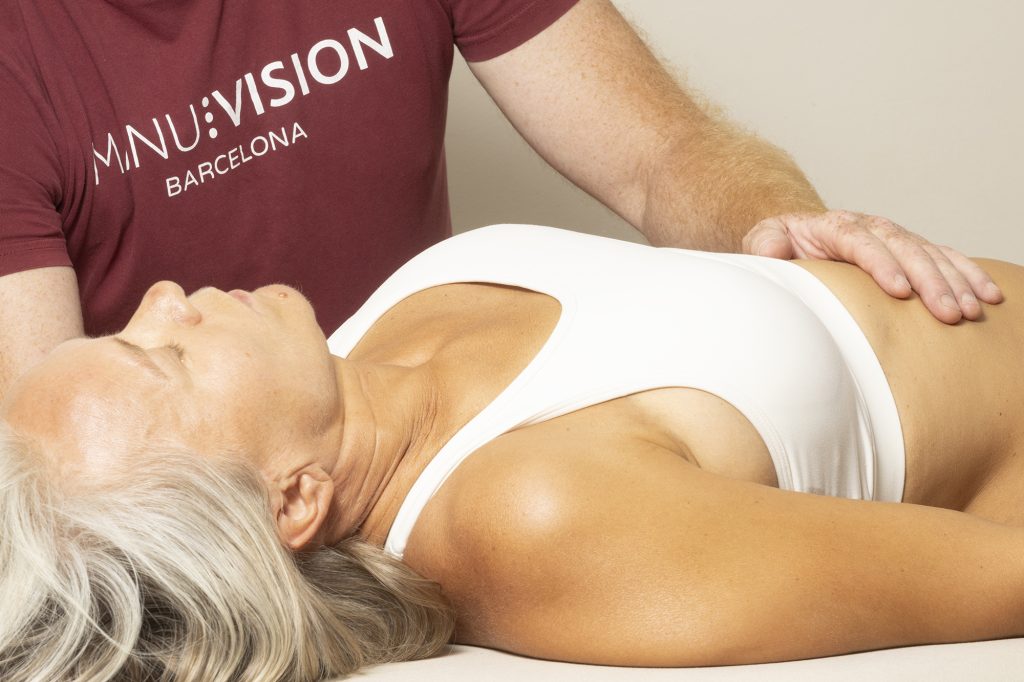
Based on the experiences from the research project, we have been further training Manuvision body therapists to treat PTSD and severe trauma since 2020. You can find our specialized shock/trauma therapists and book an appointment here
Do you also want to learn how to deal with trauma?
At the Manuvision Training you can learn to treat stress and imbalances in the nervous system based on our research-based techniques. And later it is possible to specialize in the treatment of PTSD and trauma.
podcast
In our podcast “Body Therapy and PTSD” you can hear Morten Kjelmann talk about the experience of the treatment he received in connection with the research project. Morten developed PTSD after he was deployed to Afghanistan in Helmand province in 2009.
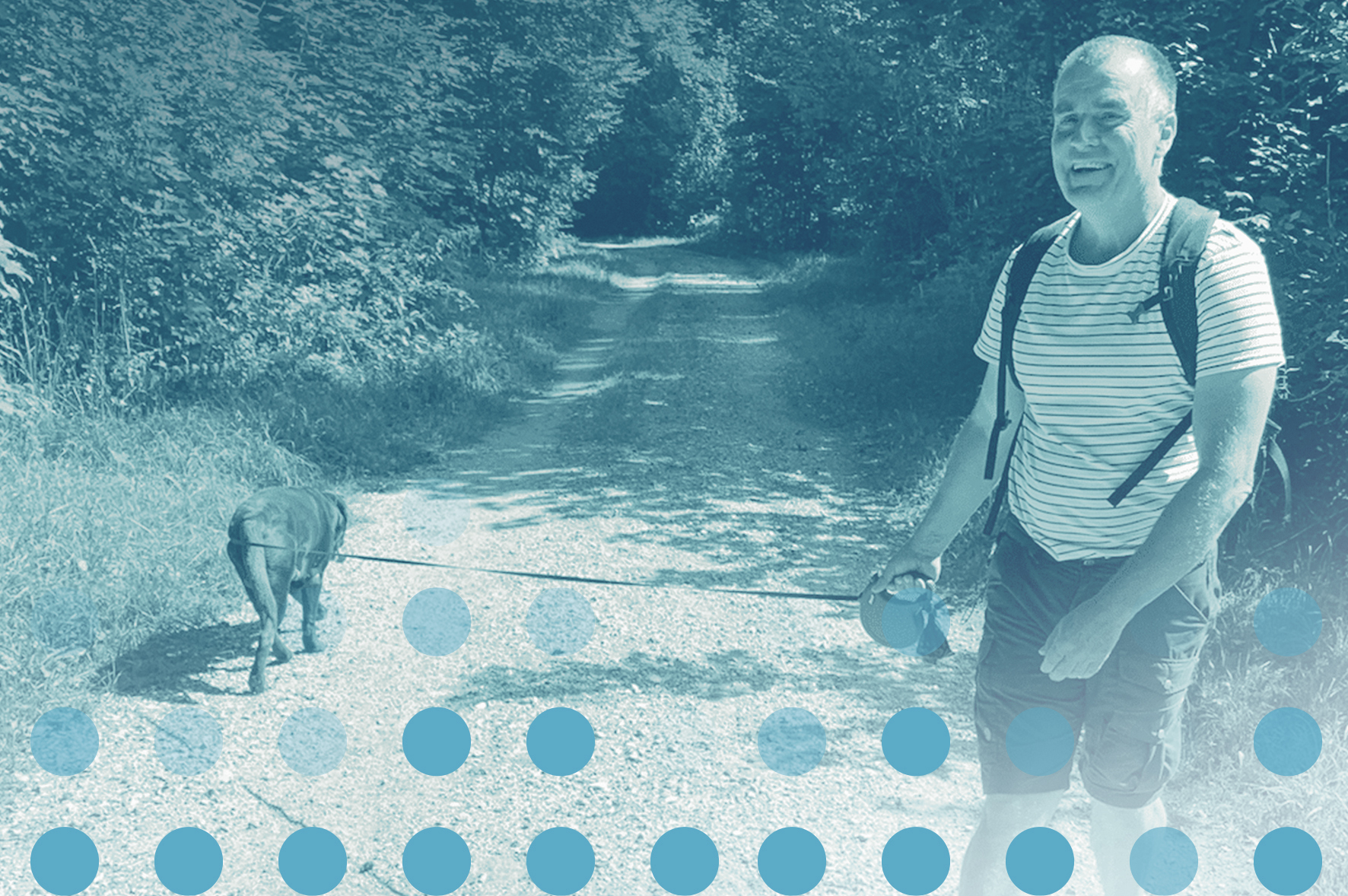
“Before the treatments, I felt socially dead. I continued my working life, because when you have been in the military, you have an enormous sense of responsibility. But my jaws trembled when I got off at 3:30 p.m. It was pure survival. The treatment brought me back to life. I learned not to run away from my feelings and reactions, because I was given tools to regulate them and to be more present with my thoughts and everything I feel. The body therapy has opened up a sensitivity where I feel I am living – and not just surviving” – Morten Kjelmann. We are at the moment working on translating the podcasts.